Thursday, October 23, 2014

Week of October 20-23

This week, the 5th graders learned about what it means for a game to be fair vs unfair.  We played a spinner game where you had to add the numbers on each spinner.  Player O got a point if the sum was odd, and player E got a point if the sum was even.  At first, many of us thought that the game was unfair, but after calculating the theoretical probability of each player winning by creating a table or diagram, we realized it actually was a fair game.

HW: Complete Think Deeply #2 for "Odd or Even"

In 4th grade, we learned about how to use guess and test with an organized list to solve two equations that go together.  We discussed ways we can eliminate items from the list (when an item costs nothing, when the difference would give us a negative number, number pairs that are far apart when you have a small difference, etc.).  We did some more practice at the following site:
http://flexmath.ck12.org/lesson/algebra/guess-and-check-to-solve-a-system-of-equations/presentation

HW: Think Deeply #1 and #2 for "A Penny for Your Thoughts"

Groups 3a and 3b learned about liquid measurement today.  We used tubs of water and containers of varying sizes to explore English units of capacity (cups, pints, quarts, half gallons or pottles, and gallons). We then figured out how much lemonade we would need for a class party by converting from one unit to another.  The following picture helped us with our conversions:

HW: p. 59 and 61


Wednesday, October 15, 2014

Week of October 13-17

This week, the 5th graders learned about the probability of compound events by answering this question: When you roll two dice and find the sum of the two numbers, are any sums more likely than others.  We learned how to make a table to help us find the probability of compound events.  This video explains it in more detail:
HW: p. 35 and 37


The fourth graders learned how to solve problems with two unknowns by using guess and test with an organized list and by drawing a diagram or picture.  Check out these sites for some other strategies and some extra practice.

http://mathcountsnotes.blogspot.com/2012/05/algebra-questions-without-using.html
http://www.algebra.com/algebra/homework/word/Linear_Equations_And_Systems_Word_Problems.faq.question.3172.html

HW: p. 33 and 35


In third grade, we talked about how to find the area of irregular shapes by breaking them apart into rectangles.  See this video for an example:
Click here to view video.

HW: p. 45 and 47

Thursday, October 9, 2014

Week of October 6-10

This week, the 5th graders learned three strategies to finding all possible outcomes of a given situation: creating an organized/systematic list, making a tree diagram, or using multiplication.  What seemed like a simple lesson became difficult when this question was posed:
What is the probability that if you guess on three true/false questions, you will get them all right?
Students were encouraged to use a tree diagram to solve this problem.  Next week, we will discuss our solutions.

HW: p. 27 and 29


In 4th grade, we learned how us use the cover-up method to solve equations.
Step 1: Cover up the variable expression (2N) and replace it with the word "what."  Ask, "What plus 7 equals 15?"  The answer is 8, so draw an arrow and write 8 underneath the variable expression.

Step 2: Write a new equation to show the value of the variable expression: 2N = 8

Step 3: Cover up the N and ask, "Two times what equals 8?"  The answer is 4, so draw an arrow and write 4 under the variable.

Step 4: Write a new equation to show that N = 4.

Step 5: Check your answer by plugging it back into the original equation.

HW: p. 23 and 25


Our 3rd graders learned the importance of standardizing units of measure this week.  Julia's uncle bought her a dog and asked her to make a pen that was 20 of his footsteps by 8 footsteps.  She did what he asked using her footsteps, and when the dog arrived, she found that the pen was too small.  We realized that her feet were much smaller than her uncle's feet, so her pen was too small.  The students had some wonderful ideas about how to solve the problem: have her uncle come over and use his feet, have another adult male use his footsteps, or use a ruler to measure the uncle's foot and use those measurements to create the pen.  This led us to the realization that in order to be accurate, we need standard units of measure.  We also learned what perimeter is and how to calculate it.


HW: p. 25 and 29 (and p. 27 if you didn't complete it in class)

Tuesday, September 30, 2014

Week of September 29th - October 3rd

This week, the 5th graders learned some differences between experimental and theoretical probabilities.  Check out this video for a recap.

HW: p. 21 and 23


In 4th grade, we learned how to solve for variables when they have a specific value by completing addition and multiplication variable puzzles.  Then, we tried to create some of our own puzzles, which proved to be pretty challenging.  Next week, we can share some of these puzzles and see if we can solve them!
HW: p. 17 and 19


In third grade, we used a variety of tools to measure various body parts, like our height, reach, distance around neck, and our radius and tibia.  We discussed how using measuring benchmarks can make estimating measurements a lot easier.  Check out some of our measuring experts in action!
HW: p. 9 and 11


Wednesday, September 24, 2014

Week of September 22-24

This week, the 5th graders played some probability games where the possible outcomes were unequally likely.  One of them involved an interesting way of assigning homework.  A teacher had a bag labeled "Heads" with one red cube in it and a bag labeled "Tails" with 3 red and 4 blue cubes in it.  He flipped a coin, picked out of the appropriate bag, and if he picked a red, there would be homework.  Blue meant no homework.  Can you figure out the probability of getting homework vs. not getting homework?  At home, students will redesign the rules so that the probability of not getting homework is greater than that of having homework.
HW: p. 13 and 15

In 4th grade, I did a magic number trick for the kids, and by the end of the class session, everyone was able to use algebra to figure out how the trick works.  I told them to try it out on family and friends at home.  It's sure to amaze them!
HW: Finish p. 8 and complete p. 9 using your new number trick cards that you made up.

Friday, September 19, 2014

Week of September 15-19

In 5th grade, we began our unit on probability.  We did some experiments involving coin tosses and picking colored cubes out of a bag, and we discussed what it means for outcomes to be equally likely.  We realized that equally likely does not always mean that the probability equals one half.  If there are 8 different colored cubes in a bag, the likelihood of picking each one is 1/8.
HW: p. 7 and 9 in the mathematician's journal (Remember to use the rubric to make sure your writing is the best it can be!)

In 4th grade, we started our Algebra unit by playing some guessing games involving mystery numbers.  Through these games, we learned the meaning of the term variable. We also learned the difference between expressions and equations and how these differences affect the definition of a variable.
HW: p. 3 and 5 in the mathematician's journal (Remember to use the rubric to make sure your writing is the best it can be!)

In 3rd grade, we talked about the importance of accuracy when taking measurements.  We learned how to convert millimeters to centimeters and measured various items around the classroom.  We discussed how different tools are appropriate for different types of measurement.
HW: complete p. 5 in the mathematician's journal.  List 8 more body parts to measure, decide what tool would work best, and explain the steps you would take to measure that body part.

measuring the height of the table

working together to get accurate measurements

Thursday, September 11, 2014

Week of September 8-12

This week was awesome because I was finally able to meet with my students and get down to business. It was wonderful to see so many familiar faces this week and to meet some students new to the program as well! Our motto this year is, "If you've never failed, you've never tried anything new!" We watched a video about some famous people who were once considered "failures" but did not give up on their dreams, and the students came up with some terrific messages like:

  • If you don't make mistakes, you won't learn from them.
  • No one is perfect.
  • It's okay to get mad, but it's not okay to give up.
  • If you fail 1,000 times, try 1,001.
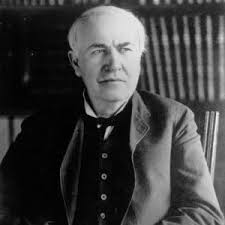
Thomas Edison
Albert Einstein

 Michael Jordan


The homework for this week is to research an invention that happened by accident or after many failures.  Choose one invention to write about and explain in your own words in your notebook.